Ostuni – The White City (7-minute drive from Villa Gufo)
A City Painted in White
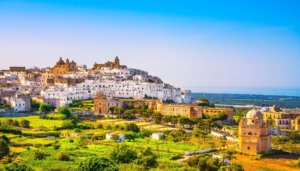
Ostuni, known as La Città Bianca (The White City), is famous for its dazzling whitewashed buildings. Residents of the historic center are required to limewash their homes annually. While this tradition appears romantic, it originally had a practical purpose. In the 17th century, the city was plagued by diseases such as the plague. Lime, with its antibacterial and disinfectant properties, was an affordable method to limit contamination. It was likely the most effective—or even the only—disinfectant available at the time. Additionally, the white walls reflect sunlight, illuminating the narrow, dark alleys.
A Maze of History
Ostuni’s centro storico was built without an urban plan, resulting in a maze of alleys, staircases, and arches. Buildings were constructed atop one another and connected through arches to provide structural support. This labyrinth of dead-end streets also served a defensive purpose, confusing invaders such as the Greeks, Romans, Goths, Byzantines, and Normans.
Piazza della Libertà – The Heart of Ostuni
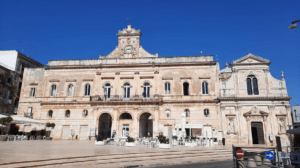
From Piazza della Libertà, you can walk uphill into the city’s oldest part.
- Palazzo San Francesco (left side of the square) – Originally a Franciscan monastery, it was renovated in the 19th century and now serves as Ostuni’s town hall.
- La Chiesa di San Francesco d’Assisi (right side) – A historic church dedicated to Saint Francis of Assisi.
Obelisco di Sant’Oronzo
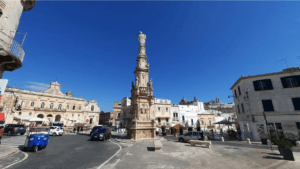
The towering 20-meter Baroque obelisk honors St. Oronzo, Ostuni’s patron saint, who is credited with saving the city from the plague in 1771.
The Cathedral – A Gothic Masterpiece
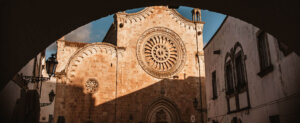
At the highest point of the historic center lies Cattedrale Santa Maria Assunta, located on La Piazzetta Cattedrale.
- Rose Window – The cathedral’s facade features an impressive rose window with 24 arches, symbolizing the hours of the day.
- Interior – The ceiling is adorned with stunning frescoes, and 12 arches inside the church represent the months of the year.
- History – Before the year 1000, an Orthodox church stood on this site. In 1128, a Romanesque church was built but was almost entirely destroyed by an earthquake in 1456. Between 1469 and 1495, the cathedral was rebuilt in Gothic style.
The Most Photographed Spot in Ostuni: Arco Scoppa
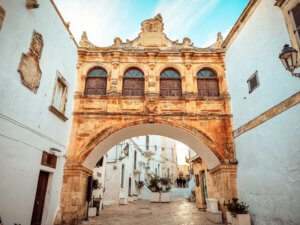
Opposite the cathedral, you’ll find Ostuni’s most iconic photo spot. This stunning arch connects Palazzo del Seminario with Palazzo Vescovile (the Bishop’s Palace). Originally made of wood due to a lack of funds and materials, it was rebuilt in stone in 1750 on the orders of Bishop Scopa.
Parking near Ostuni Centro Storico
All the parking areas listed below are paid parking and close to the historic center.
Please note: Parking enforcement is active!
Tenente Specchia
- 250m from the historic center
- From the parking lot, take the stairs up, turn left immediately, walk straight ahead, and you will arrive at Piazza della Libertà.
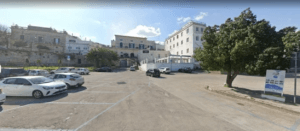
Foro Boario
- 500m from the historic center .
- Exit the parking lot at the roundabout, go right and walk uphill. Continue straight until you reach a T-junction. On the left corner, you’ll see a pharmacy. Turn left at the pharmacy and continue straight to Piazza della Libertà.
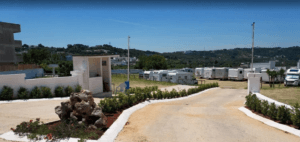
Parcheggio Pubblico
- 350m from the historic center.
- Walk uphill towards the square (keep the small church on your left), take the stairs up, and you will reach Piazza della Libertà.
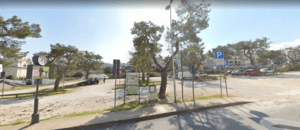
Parking in the surrounding streets is also possible. Be aware that many streets require paid parking!
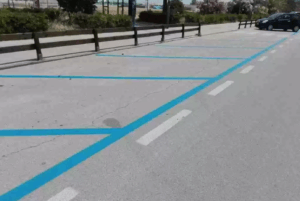
In this region, they use a color-coded system:
- Blue lines or spaces = Paid parking
- White lines = Free parking
- Yellow lines = No parking allowed